


Post-Purchase Email Examples for Small Businesses
Small Business Marketing
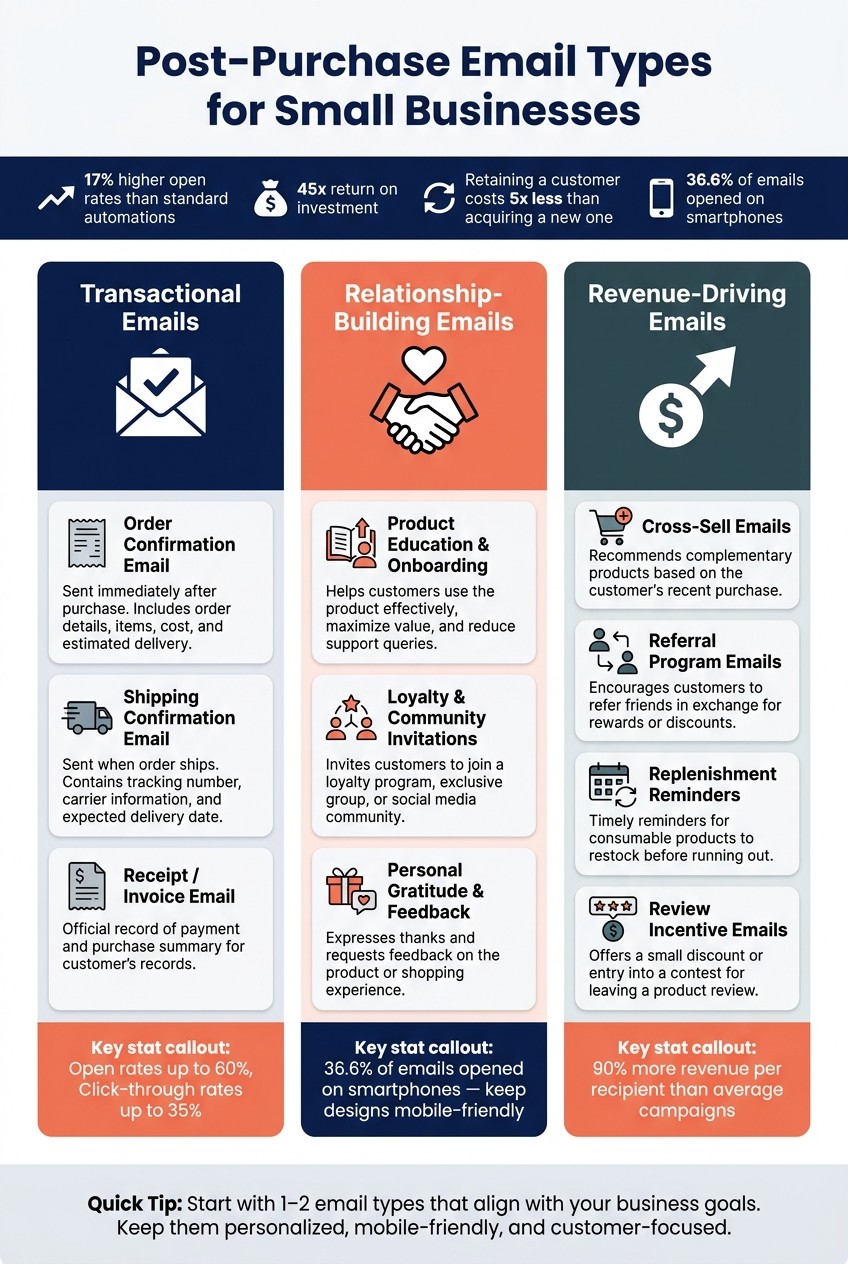
Post-purchase emails are a powerful yet often overlooked tool for small businesses. These emails do more than confirm a sale - they build trust, improve customer experience, and encourage repeat purchases. With open rates 17% higher than average and a 45x return on investment, they’re essential for turning one-time buyers into loyal customers.
Here’s what you need to know:
Transactional Emails: Order confirmations, shipping updates, and receipts provide key details, reduce uncertainty, and build trust.
Relationship-Building Emails: Product guides, loyalty invitations, and thank-you notes strengthen customer connections without pushing for more sales.
Revenue-Driving Emails: Cross-sell offers, referral programs, replenishment reminders, and review incentives drive repeat purchases and engagement.
Start with one or two email types that align with your business goals. Keep them personalized, mobile-friendly, and focused on the customer experience. Even small tweaks, like adding a tracking link or a thank-you note, can make a big difference.
Post-Purchase Email Types for Small Businesses: A Complete Guide
The Post-Purchase Flow That Boosts Sales & Customer Loyalty! (Must-Watch Email Strategy)
1. Transactional Emails
Transactional emails are a cornerstone of effective post-purchase communication. Customers not only expect them, but they also engage with them at impressively high rates. Winnie Ng, Partner Marketing Manager at AfterShip, explains:
"The open rates of these emails can jump as high as 60% and click-through rates as high as 35%. This gives ecommerce brands the unique opportunity to communicate with their customers when they are actually listening."
These emails reach customers when their attention is already focused on your brand, making them incredibly valuable touchpoints. Here are three types of transactional emails every small business should prioritize:
Order Confirmation Email
This email is sent immediately after a purchase, acting as a digital receipt and reassurance for the customer. Start with the essentials: order number, an itemized list with product photos, a detailed price breakdown (including taxes and shipping), the delivery address, and an estimated arrival date. Morgan Mulloy, Associate Director of Retention Marketing at Avex Designs, notes:
"An order confirmation email is your opportunity to answer the customer's questions before they have to ask."
By providing all the necessary details upfront, you reduce customer uncertainty and build trust.
Shipping Confirmation Email
Once the order is on its way, a shipping confirmation keeps the excitement alive. Include a one-click tracking link, photos of the shipped items, and a progress tracker that shows the order’s current status. If there are any delays, address them immediately. Proactively managing expectations helps protect your brand’s reputation far better than silence ever could.
Receipt or Invoice Email
This email serves as a professional record of the transaction, useful for returns, warranties, or expense tracking. It should clearly outline the order date, payment method, billing address, and a full breakdown of charges. Add a brief note about what comes next, such as: "Your order is being processed, and you'll receive a shipping update soon." Include a direct link to customer support for easy access.
Since about 36.6% of all emails are opened on smartphones, ensure the design is clean and mobile-friendly. Simplicity is key to making this email functional and easy to navigate.
2. Relationship-Building Emails
Once you've handled the logistics, it's time to focus on strengthening the connection with your customers. While transactional emails handle the basics, relationship-building emails go a step further by fostering trust and loyalty. Adam Kitchen, CEO of Magnet Monster, sums it up perfectly:
"Focus on optimizing the customer experience, here - don't focus on driving additional sales."
For small businesses, personalized emails are a great way to create memorable interactions. Here are three email types you should consider adding to your post-purchase strategy:
Product Education & Onboarding
Help your customers get the most out of their purchase by offering practical guidance. This could include quick how-to guides, care instructions, or even video tutorials. For example, Sephora shares application tips for specific serums after a purchase, while Descript, a software company, sends a series of onboarding emails to help users navigate complex features step by step.
Loyalty & Community Invitations
Encourage your customers to become part of something bigger than just a purchase. Athletic Greens, for example, invites new customers to join a private Facebook group, turning a one-time sale into a long-term lifestyle choice. For small businesses, this could mean inviting customers to a loyalty program, a local event, or an online community. These efforts create emotional connections that encourage repeat engagement.
Personal Gratitude & Feedback
A heartfelt thank-you note can leave a lasting impression. True Classic sends a personal message from their CEO after a purchase, while Warby Parker uses a quick one-question survey to gather feedback without taking up too much of the customer's time. Even small gestures, like referencing the specific product they bought, can make a big difference in how customers perceive your brand.
3. Revenue-Driving Emails
Once you've built trust with your customers, it's time to encourage repeat purchases through targeted email campaigns. As Angie Jones, Fractional CMO, explains:
"The toughest leap to make is from the first order to the second, and post-purchase campaigns help do that."
These emails capitalize on the goodwill you've already established, turning satisfied customers into loyal buyers. Here are four types of emails that can help drive repeat purchases:
Cross-Sell Emails
Send a follow-up email recommending complementary products. For instance, Wildling sends an email promoting a facial oil to customers who recently purchased a facial massage stone. To sweeten the deal, they include a limited-time discount, making the offer hard to resist. The secret? Recommend products that naturally pair with the customer's initial purchase.
Referral Program Emails
Happy customers can become your best advocates. ILIA Beauty uses a simple "Give $20, Get $20" referral model, offering discounts to both the referrer and the new customer. This approach not only drives new customer acquisition but also encourages repeat purchases from existing customers.
Replenishment Reminders
For consumable goods like skincare, supplements, or pet food, automated restock reminders are highly effective. Send these emails about 10 days before the customer is likely to run out. Adding a small incentive, such as free shipping, makes it even easier for them to reorder.
Review Incentive Emails
Encourage reviews while driving repeat sales. Haircare brand Irresistible Me offers a 10% discount coupon for every review a customer submits. Timing is key - send this email 2–7 days after the product is delivered, giving the customer enough time to use it before asking for feedback.
These email strategies not only keep your brand top of mind but also create opportunities for consistent revenue growth.
Conclusion
Post-purchase emails are often overlooked by small businesses, but the stats tell a different story. These emails generate 90% more revenue per recipient than average campaigns and boast 17% higher open rates than standard automations. Clearly, they’re more than just a nice-to-have; they’re a game-changer.
Beyond the numbers, post-purchase emails are key to building customer loyalty. As Zac Fromson, Co-founder of Lilo Social, explains:
"The post-purchase journey is one of the most powerful marketing touch points because it's the crossroads where brands either fall flat or earn long-term loyalty. A seamless, thoughtful experience after checkout can transform a one-time buyer into a repeat customer."
The examples highlighted - order confirmations, shipping updates, how-to guides, loyalty invitations, cross-sells, and review requests - each play a role in creating a cohesive system. Together, they build trust and encourage repeat business. Considering that retaining a customer costs far less than acquiring a new one - five times less, to be exact - this approach quickly pays off.
You don’t need to roll out every type of email right away. Start small. Choose one or two that align with your customer journey, experiment with subject lines and timing, and adjust based on feedback. Even something as simple as a well-placed replenishment reminder or a heartfelt "thank you" email with a small discount can go a long way in fostering loyalty.
Post-purchase emails are more than just follow-ups - they’re a vital tool to ensure your customers keep coming back.
FAQs
Which post-purchase emails should I start with first?
Start with emails that grab attention and provide reassurance, such as order confirmations and shipping updates. These messages create a positive first impression. Next, send a personalized thank-you email to show appreciation, and include helpful product tips or care instructions. These follow-ups not only build trust but also tap into the excitement customers feel right after their purchase, laying the groundwork for long-term loyalty.
How soon should each post-purchase email be sent?
Post-purchase emails work best when sent promptly after a customer completes their purchase. Confirmation emails should ideally be sent right away to reassure the buyer and provide details about their order. For follow-up emails, such as shipping updates or special offers, aim to send them within a few minutes to a few hours. Sending these emails quickly keeps customers engaged and taps into the enthusiasm they feel right after making a purchase.
What should I personalize in post-purchase emails?
When crafting post-purchase emails, the key is to make them feel personal and relevant. Start by addressing the customer by name and referencing their recent purchase. This small touch goes a long way in building a connection. You can also include tailored content based on their preferences or shopping behavior.
For example, share their order details, suggest products that complement their purchase, or provide exclusive offers tied to their buying history. Adding meaningful calls-to-action, like encouraging feedback or showcasing loyalty rewards, can further deepen the relationship and inspire repeat purchases.
Related Blog Posts
Join our community of 15,000+ business owners
Popular articles
Popular articles about your website and marketing your small business


